The area of photonics has actually observed remarkable advancements, specifically in the development of various modulators that play vital duties in many optical applications. Among these, fiber acousto-optic modulators (AOMs) and their numerous variations, such as space AOMs and free-space AOMs, stand out due to their convenience and effectiveness.
Among one of the most sought-after functions in laser innovation is ultra-narrow linewidth, generally connected with single-frequency lasers. These lasers create light with an exceedingly narrow spectral size, making them excellent for numerous intricate applications, including systematic communication systems and high-resolution spectroscopy. A fiber-coupled AOM, which integrates the AOM into a fiber optic system, supplies smooth combining with single-frequency fiber lasers. This combination demonstrates the fad in the direction of increased density and effectiveness in optical systems without compromising performance.
The utility of fiber optic delay lines can not be overstated, specifically in making innovative optical systems that need accurate timing and synchronization. These delay lines harness the integral buildings of fiber optics to handle light signals properly, allowing scientists and designers to discover high-speed information transmission or elaborate timing experiments with minimal loss of fidelity. The electric optical fiber delay line functions as a main element in this context, assisting in the adjustment of light signals to fit details demands.
Explore fiber aom the current improvements in photonics, concentrating on the vital duty of fiber acousto-optic modulators in enhancing laser applications, telecommunications, and accuracy optical systems for diverse markets.
Modulators are vital in laser systems, playing an important role in changing continuous wave outputs into pulse formats. Acousto-optic Q-switch modulators serve this precise purpose, making it possible for rapid modulation of laser outcomes, which results in high-peak power pulses.
Additionally, the difference between acousto-optic switches and modulators is an important aspect of understanding exactly how these devices function in different scenarios. Acousto-optic switches properly redirect beams, hence allowing numerous routing functionalities within optical systems. In comparison, a modulator changes the light’s properties, directly impacting the beam’s qualities. This difference defines their particular duties in laser systems and highlights the variety of applications each device satisfies.
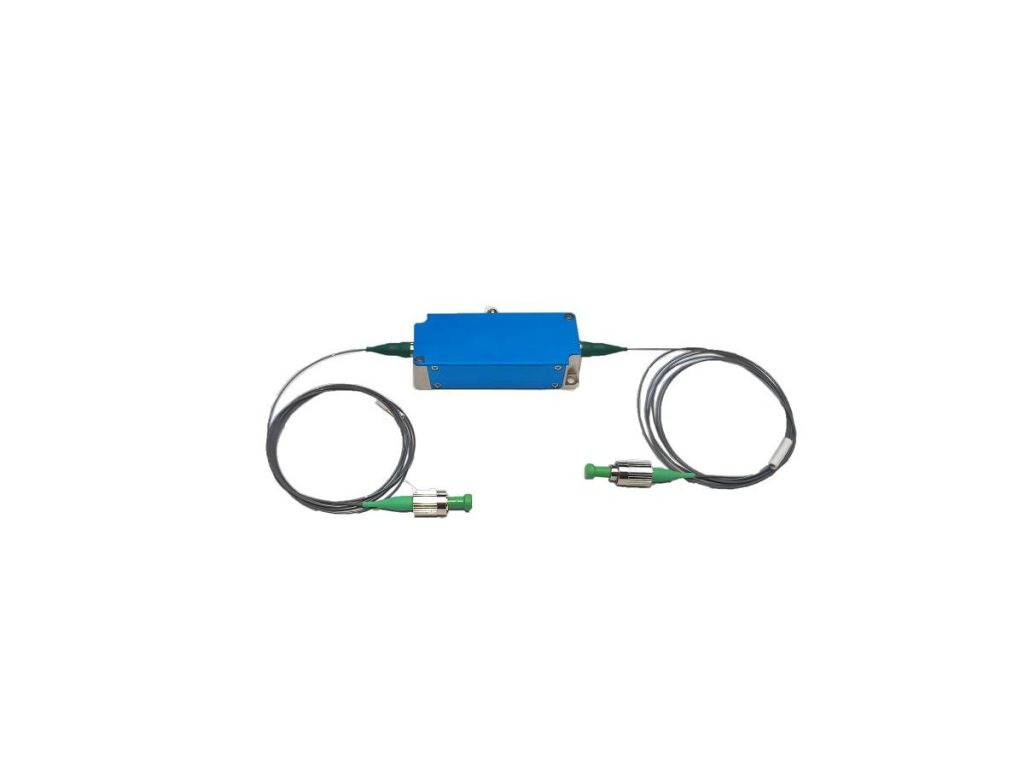
Acousto-optic devices have significantly obtained grip in the market, driven by the intensifying need for innovative optical technologies. The acousto-optic modulator market is witnessing considerable growth due to applications in telecoms, army systems, and commercial production.
The characteristics of narrow linewidth laser resources are fundamental to details applications, where coherence and precision are vital. Narrow linewidth fiber lasers exhibit secure emission with very little spooky spread, accommodating applications in fiber-optic interactions and picking up innovations. These top qualities are vital when dealing with long-distance information transmission, where signal destruction can substantially affect the top quality of info obtained. Coupling these fibers with sophisticated modulators makes it possible for scientists to explore brand-new frontiers in optical interaction systems.
Acoustic optical deflectors contribute to the convenience of optical systems, offering a means to manipulate light dynamically and efficiently by making use of acoustic waves as the regulating device. Such devices can be found in various applications, from laser scanning systems to sophisticated imaging strategies. By making use of the concepts of acousto-optics, these deflectors aid in accomplishing fast and specific modifications in the beam of light’s trajectory without the demand for complex mechanical components.
In checking out the types of pulse modulation, one realizes the intricacies and range integral in the field. Pulse modulation strategies, such as pulse-width modulation (PWM) and pulse-position modulation (PPM), allow control of light based on exhaust to develop varying signal types. These techniques cultivate advancements in electronics and photonics, from managing laser outcomes to improving the efficiency of fiber optic systems.
More consideration of optical passive components reveals their crucial duty in boosting system reliability. Their contribution to overall system performance is crucial, mostly when incorporated with modulators and various other vibrant optical devices.
The growing concentrate on space applications stresses the demand for robust and dependable optical systems that can operate successfully in severe problems. Space acousto-optic modulators, particularly, accommodate the special requirements of space objectives, where variables such as radiation exposure and temperature changes can considerably influence performance. The development of space-grade acousto-optic devices makes certain that interaction and data collection remain continuous in the severe atmospheres of space.
Acousto-optic Q-switching represents among the most effective approaches of producing high-energy pulses, crucial for applications ranging from laser noting to clinical treatments. The modulation capacities intrinsic in AOMs permit them to adapt to varying needs, maximizing pulse duration and power output. They give a cutting-edge path to raise laser applications throughout diverse fields.
As we dive better right into the future of photonics, it ends up being increasingly clear that innovation in laser modulators and acousto-optic modern technologies is pivotal. The improvements in modulator drivers boost the performance with which EOMs and aoms run, allowing faster and more trustworthy efficiency. The crossover between developments in modulation and the enhancing need for higher transmission capacity and reduced latency in communication systems suggests a future abundant with opportunities for strengthened optical interactions.
Recognizing the essential mechanics that underpin acoustic optical modulators will certainly cause superior design and efficiency renovations as research remains to flourish. The exploration of new products, combinations, and methods in locations like micro-nano manufacture will likely generate devices with also finer control and expanded functional life times. These innovations not only assure boosted capability for existing systems yet invite completely brand-new applications within emerging technologies in quantum computing, robotics, and progressed production.
In summary, the domain of acousto-optic modulators and associated fiber-optic technologies symbolizes quick progress and intricacy, functioning as foundational aspects within numerous modern optical applications. With the growing need for precision and high performance in numerous sectors, the advancement of acousto-optic devices, such as fiber AOMs, remains to progress, adjusting to new obstacles and opportunities. As designers and researchers press the boundaries of development, these devices will remain central to shaping the future of optical communication, laser applications, and beyond, proclaiming a brand-new period of technical innovation.