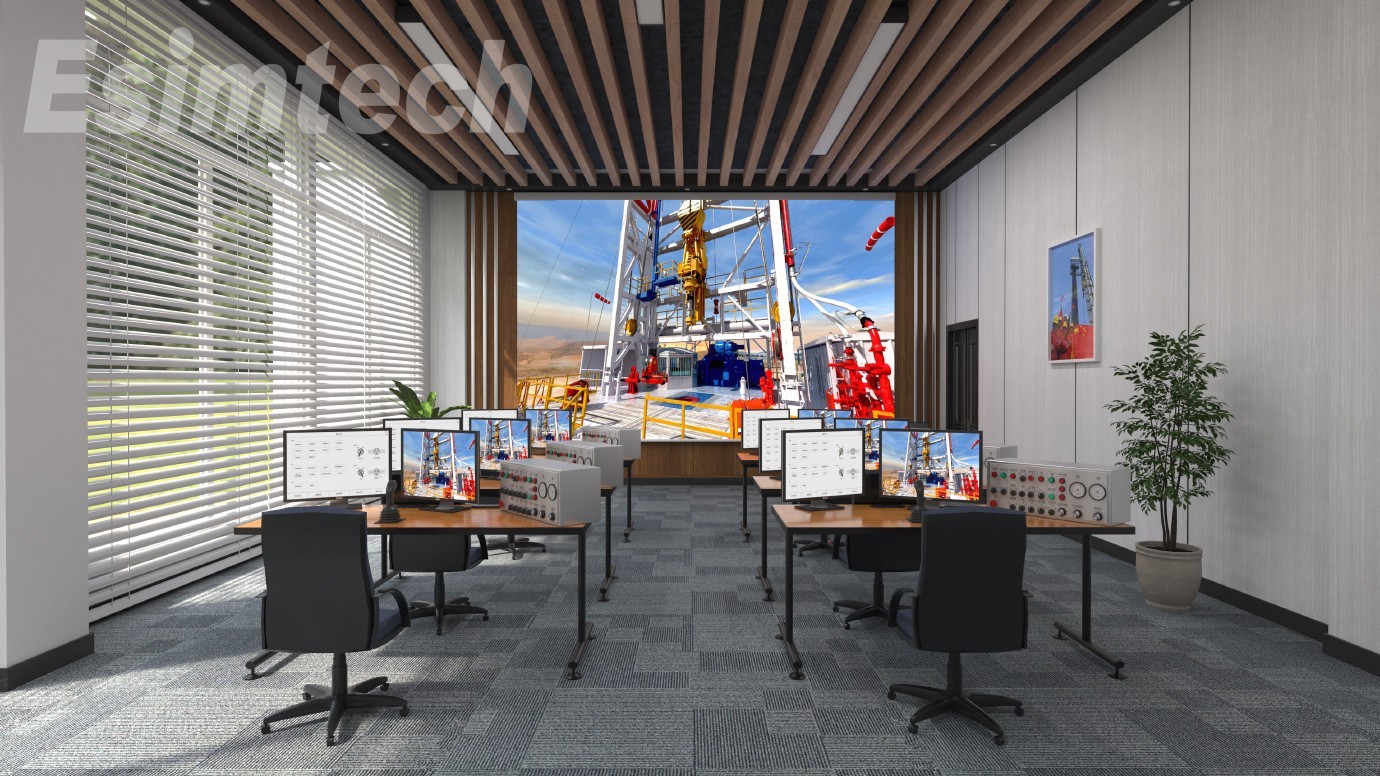
The oil and gas market is an elaborate web of operations that play an essential role in meeting worldwide energy needs. Fundamental to these procedures are various types of simulation technologies that help in improving decision-making, safety and security, and performance. Among the foundation innovations in this field is drilling simulators. These sophisticated drilling training simulators help drivers get important skills and experiences without the risks connected with real drilling. Amongst these, the Cyberchair drilling simulator stands out due to its innovative functions, enabling learners to take part in immersive and reasonable scenarios that mirror real-world difficulties dealt with during drilling operations.
Drilling simulation is not only vital for training brand-new operators yet also for proceeding education for seasoned experts. A comprehensive drilling simulator integrates various operational parameters, providing students with an all natural view of the drilling process, from preparation and execution to surveillance and analysis.
On land drilling simulators represent a significant investment in training and safety and security for oil firms. Just via effective training can business ensure that their drilling crews operate devices safely and effectively. A well-structured drilling training simulation program can dramatically decrease operational downtime and enhance efficiency, hence directly affecting the lower line. These simulators develop a safe atmosphere for students to take on complicated drilling specifications and different geological problems they could run into in the field. Training with these simulators enables repeated technique and fine-tuning of methods, inevitably causing much safer and much more effective drilling methods.
Discover Drilling Simulators how advanced simulation innovations, like drilling simulators and reservoir versions, are transforming the oil and gas market by enhancing training, security, and functional performance.
One more important facet of the oil and gas simulation landscape is reservoir simulation. These simulations highlight just how fluids move via geological developments, making it possible for designers to make informed choices concerning resource management and production approaches.
Coiled tubing simulation plays an important function in well intervention procedures. The use of coiled tubing simulation can lead to better operational effectiveness and more efficient resource use.
In addition, the unification of animation in oil and gas simulations is an expanding fad that aids in visualizing complex procedures. By leveraging oil and gas animation, business can communicate technical concepts more effectively to stakeholders, from training brand-new staff members to informing companions and capitalists. This visualization technique debunks the intricacies of drilling, reservoir management, and production procedures, allowing for a much more profound understanding of the entire procedure. The graph of drilling operations, tools mechanics, and well interventions breaks down complicated info into digestible sections, making it less complicated for numerous target markets to comprehend crucial concepts associated with oil production and management.
Reliable oil and gas data management software is the foundation of modern exploration and production tasks. Seamless data assimilation throughout all levels, from the drilling rig to the business workplace, ensures that decision-makers have the most present details at their fingertips, which can dramatically boost functional effectiveness.
In enhancement to functional effectiveness, focus to design and construction of oil rig construction has likewise end up being a factor of emphasis for lots of companies. Correctly made oil rigs can hold up against environmental stresses and enhance operational abilities, leading to more reliable drilling and exploration of hydrocarbons.
Subsea production systems are likewise an integral part of contemporary offshore oil and gas expedition. These systems, interconnected with innovative technology, enable the removal of hydrocarbons from beneath the ocean floor. Simulation modern technologies enter play below too, creating models that portray different subsea setups and aid engineers in planning and carrying out installation and maintenance activities. Via the use of subsea production simulation, operators can assess different scenarios, examine threats, and ultimately make notified decisions that improve functional safety and security and efficiency.
Check out Oil and Gas Drilling Simulation how sophisticated simulation innovations, like drilling simulators and reservoir versions, are transforming the oil and gas market by enhancing training, safety, and functional performance.
The benefits of utilizing drilling and well control simulations expand much past training; they affect the total safety and efficiency of drilling procedures. These tools can assess numerous “what-if” scenarios, varying from devices failing to unexpected geological formations, hence allowing teams to design effective drilling techniques proactively.
The oil and gas sector remains to advance swiftly, driven by technical innovations and boosting regulatory scrutiny. Oil and gas simulation continues to be a foundation of these developing practices, offering vital devices for training, planning, and performing operations safely and effectively. As the press for even more lasting energy methods intensifies, the function of simulation tools in optimizing resource removal while decreasing environmental influences will become increasingly vital. By leveraging the full abilities of drilling simulators, reservoir simulation software, and progressed subsea systems, business can navigate the intricacies of modern-day oil and gas operations a lot more effectively.
In conclusion, as the oil and gas sector encounters new difficulties, the relevance of simulation modern technologies can not be overstated. From drilling and well control simulators to detailed oil well design and subsea production systems, these tools offer worth past conventional training approaches. They enhance safety, improve source management, and make sure that employees are gotten ready for the challenges they will come across in the field. As developments remain to arise within this room, investing in the most recent simulation modern technologies will certainly be essential for companies intending to continue to be affordable, efficient, and accountable in a progressively intricate market. The future of oil and gas procedures lies firmly in the fusion of engineering quality and ingenious simulation, ensuring that the sector can fulfill the needs of a swiftly transforming globe.